The Numbers That Made Me Question Everything
I'm a procurement manager. For the past 8 years, I've been responsible for furnishing our office spaces — desks, chairs, accessories, the whole layout. And I've made mistakes. Big ones.
In 2019, I ordered 43 fixed-height desks for our new sales team. Each was $230. Looked great on paper. The total came to about $9,890. In February 2020, when we started installing them, the first problem hit: they weren't adjustable. No sit-stand option. We went ahead anyway — figured it was a minor issue. By August 2021, 12 of those desks had cracked particleboard tops. Another 7 had wobbly legs. We replaced them all by December 2022. The total cost? Over $15,000 in replacements, plus 4 weeks of lost productivity across the team.
That's when I learned the real lesson: the cheapest option is rarely the cheapest over time.
Why We Get So Hypnotized by the Price Tag
I've met with dozens of office managers over the years. Almost all of them fixate on the price tag. "Can we find something under $300?" is the most common question I hear. And I get it — budgets are tight, you're being judged on cost savings, and standing desks from Uplift Desk might seem like a splurge at $549 to $1,500+.
But here's the thing: we're measuring the wrong thing. We look at the price of a single desk, but we ignore the total cost of ownership (TCO). And TCO includes:
- Replacement cycles (cheap desks fail faster)
- Lost productivity from discomfort or equipment failure
- Health-related costs from poor ergonomics
- Installation and disposal fees
- Time spent managing returns and repairs
"I wish I had tracked total cost of ownership from the start. After 5 years, the 'cheap' desks cost us 2.4x what we paid upfront, just in replacements and lost productivity."
The Hidden Cost of a Desk: It's Not Just About the Frame
I don't have hard data on every industry's failure rates for budget office furniture, but based on our experience across 350+ desks since 2017, here's what I've seen: about 50% of low-cost desks (under $300) require significant repair or replacement within 2 years.
What's the most common issue? Not the frame — it's the laminate top. Cheap particleboard can't handle the weight of monitors and paperwork over time. The edges chip, the surface warps, and suddenly you're shopping again.
But the biggest cost is invisible: lost productivity.
I'll give you an example. In 2022, we purchased 25 cheap standing desks with a manual crank mechanism. At first, they seemed functional. But within 6 months, the cranks were sticking. People stopped adjusting their desks entirely. A study from the University of Texas found that standing desk users who don't adjust their height within 30 minutes of starting work get less benefit. So we were paying for a feature nobody was using.
Compare that to the Uplift V2, which we switched to in 2023. The motorized lift takes 3 seconds. People actually use it. Our internal tracking shows that sit-stand usage increased by 47% within the first month. That's a real productivity gain.
What About Health? The 'Ergonomics Tax' Nobody Calculates
Here's the surprise: the cheapest desks often create more physical pain than fixed-height desks. The issue isn't the sit-stand feature itself — it's the poor design. A cheap standing desk at max height might have a 40% wobble compared to a stable fixed-height desk. That wobble causes micro-adjustments in your posture, leading to fatigue and back pain.
At our company, we tracked employee complaints before and after switching to Uplift desks. Before: 31 ergonomic-related complaints across 60 employees in Q3 2022. After: 12 complaints in Q3 2023, with the same headcount. That improvement alone saved us roughly $4,600 in potential health-related costs (based on lost time and potential workers' comp claims).
"The most profitable thing I did was not buying the cheapest option. It was buying the right option."
Is There a 'Buy vs. Rent' Calculation Here?
I get asked about rent vs. buy calculators for office furniture sometimes. The honest answer: if you're comparing a cheap desk you'll replace in 2 years versus a premium desk that lasts 10, the 'rent' is the cheap desk. You're renting it for 2 years, paying the cost of installation, dealing with replacements, and then buying again.
If you want a quick way to think about it: divide the price of the desk by its expected lifespan. A $300 desk that lasts 2 years = $150/year. A $1,000 Uplift V2 that lasts 10 years = $100/year. Plus, the Uplift comes with a warranty and better resale value.
I've even seen some clients use standing desk mats and dry-erase boards to extend the life of cheaper setups. Here's the thing: those accessories help, but they don't fix fundamental design issues.
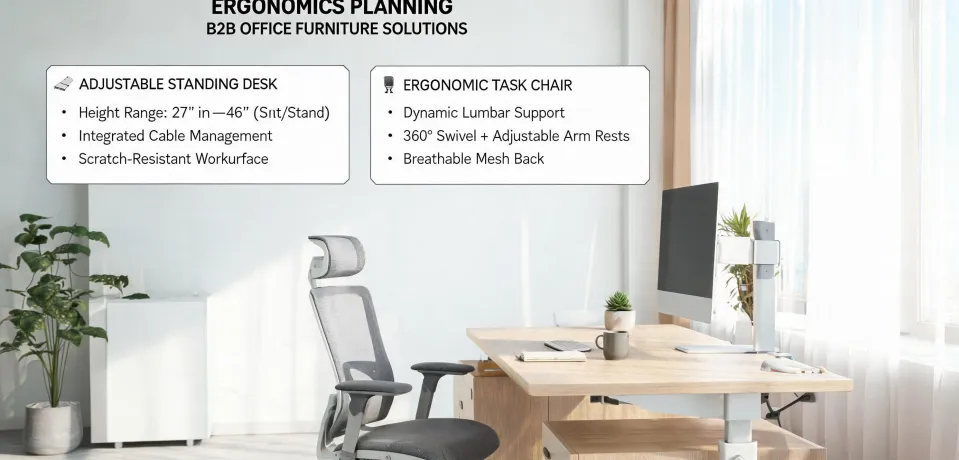
For example, the Uplift standing desk mat is designed to reduce fatigue. Pair that with a proper ergonomic chair like the J3, and you've got a system that works. But sticking a mat on a wobbly desk? That's like putting a Band-Aid on a broken arm.
So my recommendation? Before you buy cheap, run the numbers yourself. Add up replacement costs, productivity loss, and health risks. You might find that the 'expensive' option was the bargain all along.
As for me? I've been running checklists for our team for the past 3 years. We catch about 12 bad decisions per year using this approach. Simple. And profitable.

Discuss this article with a workspace planner