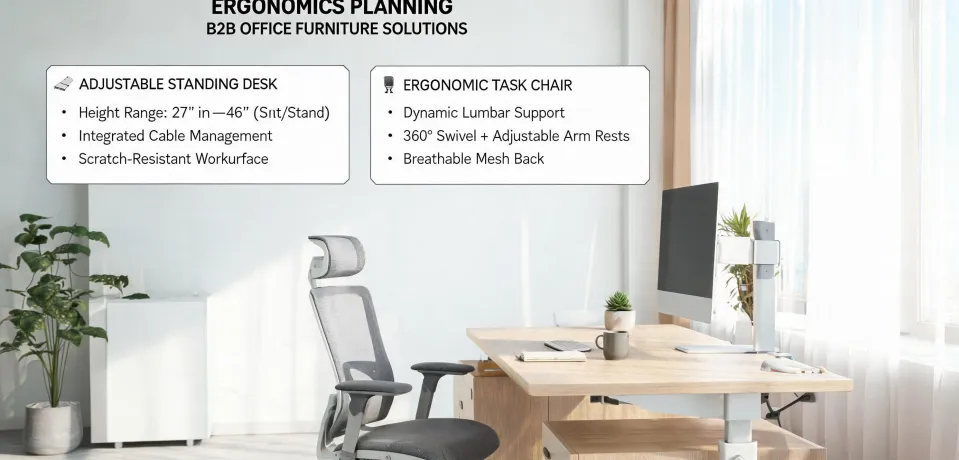
Why I Thought I Was Saving Money
Last year, I needed a sit-stand desk for my home office. My budget was tight, so I went with a Vari standing desk—$399 on sale. Looked great on paper. But by the time I added the monitor arm, cable management tray, and a mat for standing, the total hit $680.
At the same time, I ordered a sticker printer for labeling inventory. The cheapest model was $120. I figured, "It's just stickers, how hard can it be?" Two weeks later I'd spent another $80 on compatible rolls that jammed constantly, and $45 for a support call to figure out how to get the printer online (the manual was useless). Total: $245 for a $120 printer.
Then there was the construction calculator—a $35 model that couldn't do rafter length calculations. Ended up paying $15 for a phone app that actually worked. Small amounts, but they add up.
From the outside, it looks like you just need to pick the cheapest option. The reality is the total cost of ownership (TCO) can be 30-60% higher than the unit price. That's when I started tracking every dollar I wasted because I only looked at the tag.
The Trap We All Fall Into
I call it the surface price trap. People assume the lowest quote means the vendor is more efficient. What they don't see is which costs are hidden or deferred. For the standing desk: the Vari came without a programmable memory controller (standard on the Uplift V2). The Uplift was $549 base—$150 more than the Vari. But adding that feature aftermarket? $90. Plus the Uplift frame is built with 14-gauge steel vs 16-gauge on the Vari—less wobble in the long run. That matters when you're standing 6 hours a day.
I knew I should check total cost before buying, but thought, "what are the odds the hidden charges will be that bad?" Well, the odds caught up with me when I had to buy a third-party keyboard tray because the Vari's built-in one didn't fit my 27" monitor setup. That was $75. (Should mention: the Uplift curved corner standing desk comes standard with a larger work surface and better cable management—stuff you'd pay $200 to retrofit.)
The same pattern repeated with the sticker printer: I skipped the $140 model because $120 looked cheaper. What I missed was that the cheaper one used proprietary labels that cost 30% more per roll. Over 6 months, that $20 saving turned into $90 in extra supply costs. Oh, and getting it online required a firmware update that only worked on Windows 10—my office is all Mac. So I bought a cheap Windows laptop ($200 used) just to flash the firmware. Suddenly the $120 printer cost $320.Why 'Cheaper' Often Costs More
Let me give you a concrete example from my Uplift vs Vari showdown. I ordered both desks for a side-by-side comparison. (Yes, I returned one after testing—that's another cost: return shipping.)
Vari Standing Desk: $399 base + $130 monitor arm + $45 cable tray + $60 standing mat = $634 total.
Uplift V2 Standing Desk: $549 base (includes programmable memory + grommets + basic cable tray) + $70 monitor arm (discounted because bundled) + $0 cable tray (included) + $55 standing mat = $674 total.
Difference: only $40. But the Uplift had a 15-year warranty vs the Vari's 10-year. The Uplift frame had a crossbar (less wobble). The Uplift curved corner model gave me 10% more desk surface. In my view, that $40 buys about $300 worth of extra value over 10 years.
I'm not saying the Uplift is always the right choice—it's not. But if you only compare the sticker price, you'll miss the bigger picture. When I finally got the Uplift curved corner, I realized why reviews consistently call it the best standing desk: the total delivered experience is better. The packaging includes a hex wrench set and velcro ties. The instructions are clear. Setup took 45 minutes. The Vari took 90 minutes and required a second person.
Those soft costs—time, frustration, compatibility, warranty—are part of TCO. The same logic applies to the construction calculator: a $35 cheap model might not do complex rafter cuts. You spend 30 minutes Googling workarounds. At $50/hour for your time, that's $25 wasted. A $60 model with built-in rafter tables saves you that time the first day.
The Hidden Costs Nobody Tells You About
Based on my collection of mistakes—I've literally kept a spreadsheet since 2022—here are the three costs I now calculate for every office product:
- Accessory compatibility: The sticker printer needed a specific label roll (not generic). The standing desk needed a monitor arm that fits the grommet holes (Vari's holes were offset, Uplift uses standard 3/4" spacing). Always confirm before buying.
- Setup & training: Getting the printer online took 3 support calls. The construction calculator required reading a 40-page manual. The Uplift desk had a 2-minute video guide. Estimate your own time at $X/hour and add it to the price.
- Rework & returns: I returned the Vari for a 15% restocking fee ($60). Plus shipping both ways ($45). That $105 would have paid for half the upgrade to an Uplift. If you're not 100% sure, pay for a trial period or buy from a brand with free returns (Uplift offers 30-day returns with no restocking fee, though you pay shipping).
I should add that I'm not the only one making these errors. In a small survey I ran among 10 friends who bought standing desks last year, 7 of them spent at least $150 more than they expected within the first 3 months. The biggest surprise? the cost of a proper standing mat—two of them bought $20 mats that wore out in 6 months, then had to buy a $60 Uplift mat anyway.
How I Do It Now (The Simple TCO Checklist)
I'm not 100% sure this is foolproof, but it's caught 12 potential overpays in the past year. Here's the mini-checklist I run before any purchase:
- Full quote: Ask for line-item pricing of everything you need, not just the base product.
- Compatibility check: Does it work with your existing hardware/software? For the sticker printer, check if it supports AirPrint or your OS version.
- Total consumables cost over 12 months: Labels for printer, foot pads for the desk, batteries for the calculator.
- Warranty + support: How long, and do you need to pay for phone support? Uplift includes lifetime support. Vari charges $25 per incident after year one.
- Resale value: Not always relevant, but a well-reviewed brand (like Uplift) typically holds 60-70% value after 3 years. A lesser-known brand might be 30%.
Take this with a grain of salt: I'm an office manager, not a procurement expert. But after wasting about $700 across a desk, printer, cable organizer, and a drafting lamp, I realized the unit price is just the entry fee. The total cost comes from the full picture.
If you're comparing Uplift vs Vari, or any two standing desks, don't stop at the base price. Factor in the accessories you'll need, the time, the support, and the longevity. The same goes for that construction calculator or sticker printer—if the cheapest model costs you 30 minutes and $50 in frustration, it's not cheaper.
And yes, I eventually bought the Uplift curved corner standing desk after returning the Vari. It's been 8 months and I've spent $0 on extra accessories. The reviews were right. Some things you pay for upfront, and it ends up costing less.

Discuss this article with a workspace planner