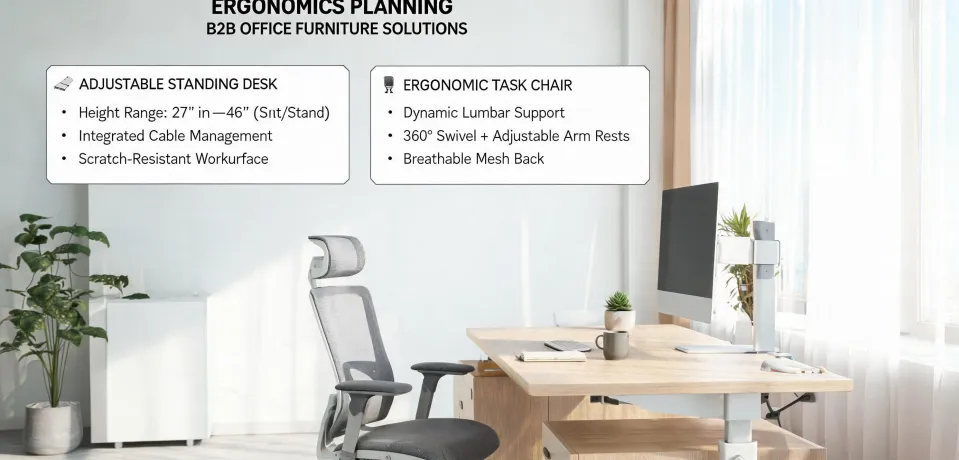
In March 2024, I sat in a makeshift conference room—really just four folding tables pushed together—staring at a spreadsheet of vendor quotes. We were furnishing a new satellite office for our commercial furniture brand, and I'd been handed the project because I'm the person who reviews everything before it reaches customers. Roughly 200 items a year. I've rejected about 15% of first deliveries since I implemented our verification protocol in 2022—wrong specs, wrong finish, wrong hardware. That's not pessimism; it's pattern recognition.
My mandate was simple: 40 electric standing desks, ergonomic seating, and enough accessories to make the space functional. My budget was $38,000. My deadline was eight weeks. My boss said, "Get the best value." I nodded. We both knew that was easier to say than to calculate.
The Search Begins
I started where most people start: with unit price. Four vendors, roughly comparable specs, and a clear leader on the quote sheet. One brand—uplift-desk—came in about 12% higher per unit than the lowest bidder. On 40 desks, that 12% represented nearly $4,000. Not trivial.
But here's what I've learned from four years of vendor evaluations: the first number is almost never the relevant number. It's tempting to think you can just compare line-item prices across quotes. But identical specs from different vendors can produce wildly different total outcomes. The lowest unit price often carries the highest hidden costs.
Still, I almost went with the cheaper option. The numbers said save the $4,000—redirect it to accessories, maybe upgrade the seating. My gut said something was off. So I did what I always do when intuition and data disagree: I dug deeper into the specifications.
The Accessories Maze (and the Craft Table Detour)
The original plan included desk organizers for every workstation. Simple enough, right? I ordered 40 uplift desk organizers at what seemed like a reasonable bulk rate. They arrived in three separate shipments over 11 days—a logistics headache that delayed our setup by nearly a week. Nobody warns you about staggered fulfillment, and the vendor's "estimated delivery window" turned out to be a work of optimistic fiction.
Meanwhile, one of our designers asked if we could source an uplift desk craft table—something larger for sample layouts and material prep. That single request sent me down a two-day rabbit hole comparing custom fabrication quotes. The lowest bidder quoted $1,200; the mid-range quote was $1,750. I chose the mid-range option because the budget vendor couldn't confirm their laminate would match our existing desk finishes. That $550 difference bought consistency—and avoided a visual mismatch our brand team would have flagged immediately.
That's when I started noticing something: every "small" decision was accumulating hidden costs. Shipping fees. Restocking charges from a seating vendor that sent the wrong armrest color. And—I'm slightly embarrassed to admit this—one afternoon lost entirely to a temperamental office printer that kept outputting blank pages when we tried to print spec sheets. I spent 90 minutes troubleshooting before realizing the cyan cartridge was installed in the magenta slot. Sometimes the problem is simpler than you think.
The Real Cost Reveals Itself
By week six, I had two nearly complete setups: one from the budget vendor, one from uplift-desk. I ran a blind comparison with five team members. Same task: adjust the desk to a comfortable standing height, organize the surface, and identify any early quality concerns.
Four out of five chose the uplift-desk setup as "more professional" and "more solid"—without knowing the brand or the price. The cost differential was $85 per desk. On our 40-desk order, that's $3,400 for measurably better perception and, based on our early durability checks, likely better longevity. The budget vendor's laminate already showed minor scuffing after two weeks of normal use. The uplift surfaces looked new.
Was I frustrated that my initial spreadsheet analysis had been incomplete? Absolutely. But I was more frustrated by how easy it is to ignore the costs that don't show up on a quote sheet: the time spent managing staggered deliveries, the productivity lost to rework, the risk of brand inconsistency, the sheer mental overhead of chasing defects.
What I Do Differently Now
I calculate total cost of ownership before comparing any vendor quotes. That means tallying:
- Base product price
- Shipping and handling (including multi-shipment surprises)
- Setup and installation time
- My team's hours spent managing issues
- Expected rework or replacement costs
- Risk of brand or customer perception damage
The $500 quote that turns into $800 after shipping, setup, and revision fees is more expensive than the $650 all-inclusive quote. The cheapest option isn't the lowest number on the first page—it's the one that doesn't drain your time, your patience, and your quality standards.
One thing I still can't predict: why some vendors consistently beat their quoted timelines while others consistently miss. My best guess is it comes down to internal buffer practices—some build slack into their estimates, others treat every delivery as a sprint. If anyone has cracked that code, I'd genuinely like to hear it.
This pricing and product experience was accurate as of Q1 2025. The office furniture market shifts constantly—new materials, new vendors, new supply chain headaches—so verify current specs and rates before budgeting.
What I learned in 2024 is simple: unit price is a vanity metric. Total cost is the only number that matters. And sometimes the most expensive-looking option is actually the cheapest one you'll ever buy.

Discuss this article with a workspace planner