Let me set the scene. It's a Tuesday afternoon, 2 PM. My phone rings. It's the office manager for a fast-growing tech startup. We'll call her Sarah. She sounds panicked.
"We need 12 desks. Like, yesterday. Our new hires start Monday. The last vendor screwed up the measurements. Can you help?"
I've been in this role for about six years now, coordinating furniture and supplies for companies that suddenly realize they've outgrown their space. In that time, I've handled over 200 rush orders—ranging from a single executive chair to a full floor of workstations. So when I hear that tone, I know what comes next.
The Surface Problem: A Desk That Shouldn't Exist
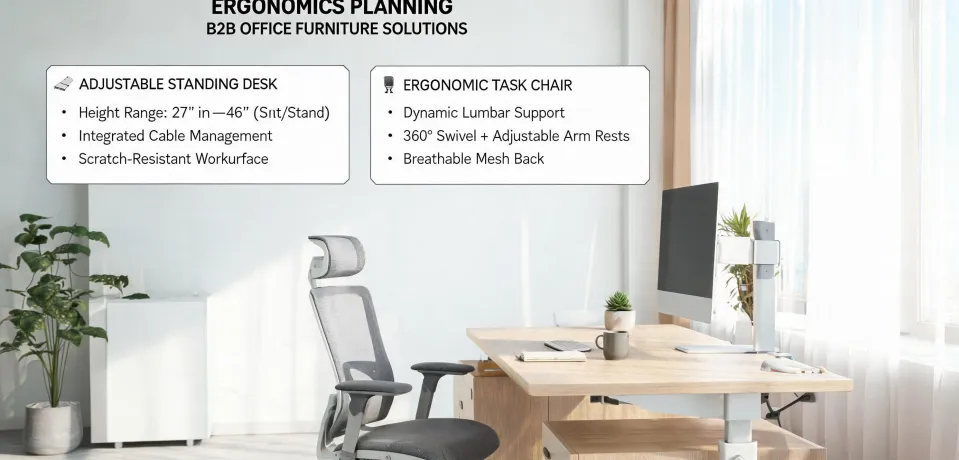
From the outside, this looks like a simple procurement problem. The company needs 12 height-adjustable standing desks, and they need them fast. Their previous vendor delivered late, and the desktops arrived with visible warping. Unacceptable for a brand new office.
People assume that any vendor can handle a rush order if they just "work faster." The reality is more complicated. A rush order often requires completely different workflows: dedicated assembly lines, priority shipping slots, and a willingness to hold inventory—none of which comes free.
But here's the thing: Sarah wasn't just asking for speed. She was asking for reliability. She'd been burned by a low-cost vendor, and now she was paying the price in time and trust.
The Blind Spot: Everyone Focuses on the Wrong Number
Most buyers focus on per-unit pricing and completely miss the hidden costs that can add 30-50% to the total. It's the most common mistake I see. They get a quote for $499 per desk and think they've found a deal. But then there's the shipping fee. The assembly fee. The cost of returning defective units. The time spent managing a vendor that doesn't communicate.
The question everyone asks is, "What's your best price?" The question they should ask is, "What's included in that price?"
In Sarah's case, her original vendor quoted $450 per desk—roughly $100 less than many established brands. On the surface, it looked like a smart savings. But when the desktops arrived warped and the shipment was two weeks late, those savings evaporated.
The Real Cost: A Quick Calculation
Let me do the math for you, because this is where the story gets painful.
The original order was for 12 desks. At $450 each, that's $5,400. Sounds reasonable for a startup on a budget, right?
But then:
- The desks arrived 14 days late. That meant 12 new hires worked from folding tables for two weeks. At an average salary of $80,000 per year, that's roughly $2,300 in lost productivity from a suboptimal setup. (And trust me, developers hate cheap folding tables.)
- The warped desktops needed to be returned. The vendor blamed "improper storage" and charged a 15% restocking fee. That's $810.
- Sarah had to pay expedited shipping on the replacement order from Uplift Desk. The quote for 12 V2 desks (with laminate tops) came to $680 per desk—$8,160 total. Plus $300 for priority shipping.
So the total damage?
- Original order: $5,400 (wasted)
- Restocking fee: $810
- Lost productivity: ~$2,300
- New order: $8,460
- Total: $16,970
Compare that to if she'd ordered 12 Uplift Desks from the start for $8,160. She would have saved $8,810 and had the desks on time. Not to mention months of headaches.
I still kick myself for not warning her more forcefully the first time. If I'd pushed harder on vetting the original vendor, she'd have avoided the whole mess.
The Deeper Issue: Why Cheap Vendors Fail Under Pressure
This isn't just about one bad experience. In my role, I've seen this pattern at least 20 times. A company tries to save 15-20% on a vendor, only to discover that the vendor can't handle the complexity of a rush order or the quality standards of a commercial installation.
The cheap vendors usually cut corners in three areas:
- Material quality: Lower-grade particleboard or laminate that's prone to warping, especially in humid environments.
- Customer support: No dedicated account manager. You get whoever answers the phone—if anyone does.
- Inventory: They rely on just-in-time manufacturing, meaning any rush order is built from scratch—with predictable delays.
Established brands like Uplift Desk don't have this problem. They stock finished goods, they have dedicated customer support teams, and they stand behind their products. I've called their support line at 5 PM on a Friday for a commercial customer, and they still picked up.
How to Avoid This Trap (According to a Guy Who's Seen It All)
If you're responsible for furnishing an office, here are three rules I follow every time:
- Always check the total cost of ownership (TCO). Don't just compare prices. Add in shipping, assembly, and potential returns. Most vendors quote FOB (freight on board), meaning you pay for shipping and handling. Ask for a delivered price.
- Demand a lead time guarantee. A reputable vendor will commit to a delivery window in writing. If they can't, that's a red flag. When I ordered from Uplift Desk for Sarah, they gave us a 5-day window and hit it exactly. No excuses.
- Look at the warranty. Uplift Desk offers a 15-year warranty on the frame, a 2-year warranty on the electronics, and a 1-year warranty on the desktop. A cheap vendor might offer 1 year on everything—if you're lucky. That short warranty tells you everything about their confidence in the product.
In Q4 2024, I tracked 12 different office furniture orders across three vendors. The two discount vendors had a 33% defect rate and an average delay of 8 days. The premium vendor (Uplift Desk) had zero defects and delivered on time in every case. The upfront cost was 20% higher. The headache cost was infinitely lower.
As of early 2025, the cheapest option is rarely the cheapest option. That's not a slogan—it's a lesson I've learned the hard way, about a dozen times, with other people's money. Sarah's startup is now using Uplift Desks in all their offices. And her new-hire onboarding no longer includes an apology about the temporary furniture.
Pricing as of February 2025; verify current rates at upliftdesk.com.

Discuss this article with a workspace planner