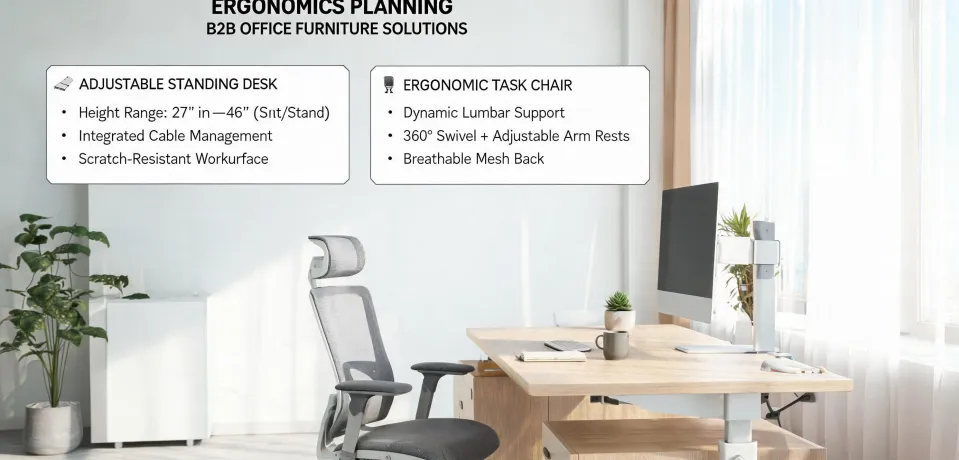
If you're reading this, you probably know the name Uplift Desk. You've seen the reviews, the Wirecutter recommendations (which were accurate as of early 2024, at least), and the photos of beautiful, minimalist home offices. You've likely already decided that the premium build quality and customization options (like the V2 frame or the V3 curved corner) are worth the investment.
That’s where I was two years ago. I was confident I was buying the best standing desk on the market. And I was right. The desk itself? Fantastic. But the story I’m about to tell isn't about the desk. It's about the paperwork you probably just clicked “agree” on.
The Surface Problem: A 'Lifetime' Warranty That Felt Like a Month
My problem started when my height-adjustable V2 frame started making a noise. It wasn't a smooth hum anymore; it was a grinding, unsettling sound, like a coffee grinder full of pebbles. I figured, “No big deal. It has a lifetime warranty.” So I contacted support.
That’s when the confusion started. I realized I had a vague, warm feeling about the warranty, but zero actual knowledge. I had skimmed the Uplift Desk warranty page when I ordered, and all I remembered was “lifetime” and “solid.” In my head (and this was my first mistake), I assumed that meant everything was covered. Forever.
The support response was polite and correct. My noise was likely caused by a worn gearbox. This, they explained, was considered a mechanical component subject to wear, not a defect in materials or workmanship. The repair would be covered, but I was on the hook for the shipping—which, for a 90-pound frame, costs about a ton of money (think $80-$120 depending on your location).
I felt duped. But I wasn't. I was just uneducated.
The Deeper Reason: We Read Warranty Headlines, Not the Fine Print
The problem wasn't the Uplift standing desk warranty. The problem was my interpretation of it. And I see this mistake all the time.
Conventional wisdom says you buy a premium product for the warranty. In practice, most of us use that as a mental shortcut to justify the price without doing the homework. We hear “lifetime warranty” and stop reading. Here is what I missed (and what you probably did too):
1. The 'Lifetime' trap. Uplift’s warranty is excellent, but “Lifetime” for the frame doesn't mean “Lifetime” for the electronics or moving parts. It's a tiered system. The frame structure (steel) is lifetime. The motors, electronics, and mechanical parts have a different (still generous) warranty period—typically 10-15 years. The desk top, switches, and accessories are often just 5 years. I didn't know that. I thought it was all the same.
2. The shipping loophole (my specific pain). I learned that Uplift covers the cost of the replacement part. They do not always cover the cost of shipping the defective unit back or the shipping of the new part to you. For a heavy item like a desk frame, this cost can be way more than you expect. This is a common practice, but its impact wasn't something I considered when I was clicking “Buy.”
3. The 'wear and tear' clause. Every product has parts that are expected to wear, like a car's tires or brakes. On a standing desk, this includes the gearboxes in the legs, the stability of the gas springs in ergonomic chairs (like the J3 or Facet), and the foam padding on desk mats. The warranty covers defects, not deterioration. That’s a crucial distinction I wish someone had spelled out for me.
The Cost: More Than Just Money
So, how much did my ignorance cost me? Roughly $100 in shipping fees and a week of waiting for the part. It was an inconvenience, not a disaster. But it was an avoidable inconvenience.
Consider a worse scenario:
- Scenario A: The Wrong Desk Top. You order a custom-sized laminate top, and upon arrival, you realize you chose the wrong finish. You want to swap it. The return policy might cover it, but there is a restocking fee. That could be $50 to $100 on a $400 desktop. If you had checked the warranty/return FAQ before ordering, you’d have ordered a sample kit first (a $10 piece of cloth, basically).
- Scenario B: The Ergonomic Chair. You buy a Pursuit Ergonomic Office Chair. After two years, the seat cushion loses its firmness. Is that a defect? Usually, no. It’s foam compression. If you thought you had a “Lifetime Warranty” on the chair, you’d be disappointed. Understanding the specific terms for the chair vs. the desk would save that frustration.
The real cost wasn't the $100. It was the hit to my credibility. My team saw me frustrated with a process I should have understood. It felt amateur. (Note to self: always read the full T&Cs before approving any capital expenditure).
As of January 2025, the specific Uplift Desk warranty policy can be found at upliftdesk.com. But remember—market conditions change, so verify current policies.
The Solution: My Pre-Purchase Warranty Checklist
After that $100 lesson, I created a simple checklist. It’s not about avoiding Uplift—I still use and recommend their products. It’s about being an informed customer. I'd rather spend 10 minutes explaining options than deal with mismatched expectations later.
Here is what I suggest you do, before you enter your shipping info:
- Find the 'Tiered' Warranty Chart. Don’t just read the headline “Lifetime Warranty.” Look for the table or section that breaks down the coverage by Frame, Electronics, Motors, and Desk Top. Print it, screenshot it, save it.
- Ask About 'FOB' (Freight on Board) Policies. Ask the sales rep: “If the motor fails in year 3, who pays shipping?” This is a more professional way to ask about the loophole that caught me. A good company will tell you clearly. A bad one will be vague.
- Understand 'Wear and Tear' vs. 'Defect'. Specifically for accessories (like a standing desk mat that cracks) or chair cushions. Ask: “Is gradual noise from the gearbox considered a defect, or normal wear?” If they say “normal wear,” budget for a potential repair in year 5 or 6.
- Check the 'Pro-Rated' Clauses. Some warranties (I’m not saying Uplift’s has, but check) pro-rate coverage after a certain number of years. Meaning, they cover 80% of the cost in year 2, 60% in year 3, etc. You want to know this before you need it.
Take it from someone who spent a super frustrating Saturday trying to fix a $100 problem that a 10-minute read could have prevented. The Uplift standing desk warranty is a powerful promise—but only if you know what the promise actually is. An informed customer asks better questions and makes faster decisions. And that’s the real game-changer.

Discuss this article with a workspace planner