The Email That Started It All
It hit my inbox on a random Tuesday in early 2024. The subject line: 'Please tell me we have a seating budget.' Our head of operations, Sarah, had just walked through the engineering bullpen and counted seven employees using makeshift standing desk converters—cardboard boxes, old textbooks, a literal crate from the breakroom.
“I assumed,” she wrote, “that we’d have proper sit-stand desks by now. What’s the plan?”
Fair question. When I took over purchasing in 2020, I had promised to modernize our office setup. But budgets got frozen. Priorities shifted. Four years later, we were still running on a mix of aging fixed-height desks and those DIY cardboard contraptions.
Not ideal, but workable—until it wasn't.
So I started researching. And that's how I landed on UPLIFT Desk.
The Shortcut That Almost Cost Us
For context, I manage all office equipment ordering for a 400-person company across three locations. My annual spend is roughly $150,000 across eight vendors. I report to both operations and finance. So when I propose a big purchase like new desks for the entire team, I need to justify every dollar.
My first instinct was to go cheap. I'm an admin buyer. We're trained to save money, right? I found a vendor offering standing desks at $350 each—half the price of UPLIFT's V2 model. The specs looked similar. The reviews were decent. I assumed they'd be fine.
Here's what I learned: that assumption was expensive.
I placed a test order for five units. They arrived one week late (the cheap vendor used a budget shipping partner). Two desks had scratches on the frame. One motor made a grinding noise. And the assembly instructions? Translated from Chinese into what I can only describe as aggressive poetry.
“Turn screw until desk scream,” one step read. I am not making this up.
I spent five hours on the phone with their customer service—which, by the way, had a 45-minute hold time. Total cost of that test: $1,750 for the desks, plus about $400 in wasted labor from our facilities team.
For context, that $400 could have bought us a case of copy paper—which, by the way, we burn through 200 reams of monthly. Or maybe a nicer office chair for someone.
Anyway. The cheap option wasn't cheap. It was penny wise, pound foolish.
The Turn: Why UPLIFT Desk Stood Out
Frustrated, I went back to basics. I started reading UPLIFT Desk reviews—like, real reviews from actual office buyers, not the curated ones on the website. I found a Wirecutter recommendation from 2023 that called the UPLIFT V2 the best standing desk for most people. That caught my attention.
Then I called their sales team. Not to buy—to ask questions. “What's your lead time? Do you offer bulk discounts? Can we customize laminate colors for specific departments? What's your warranty?”
The rep, a guy named Jake, spent 25 minutes on the phone with me. He didn't try to upsell me. He explained the difference between the V2 and V3 frames. He told me about the curved corner model for our management team. He even pointed me to their standing desk mat as an add-on, noting that without it, some users develop foot fatigue.
That last part was key. If I'd bought the cheap desks without mats, employees would've complained. That would've meant more budget requests. More approvals. More headaches.
So I decided to go with UPLIFT.
What We Actually Ordered
Here's the breakdown for our initial rollout—we decided to start with the engineering team (75 people) as a pilot:
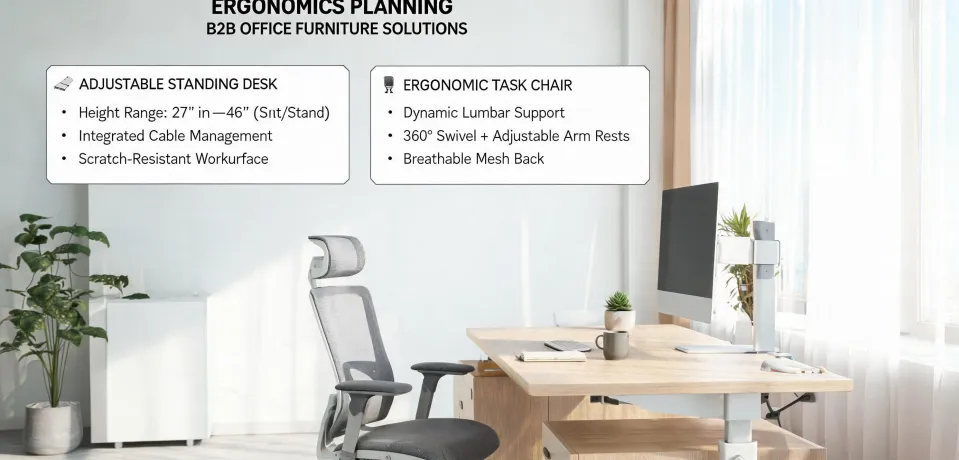
- UPLIFT V2 standing desks (60 units): ~$900 each, including advanced programming keypads
- UPLIFT L-shaped standing desks (15 units): ~$1,200 each, for team leads with extra monitor real estate
- UPLIFT Pursuit ergonomic chair (75 units): ~$500 each, paired with each desk
- Standing desk mats (75 units): ~$60 each
Total: about $125,000 for the pilot. Which sounds like a lot—until you remember I had already spent $1,750 testing a cheaper option that failed. The UPLIFT order was 70x larger but came with zero headaches.
The desks arrived on time, in perfect condition, with clear assembly instructions. Our facilities team installed everything in two days. Everyone got a how-to-adjust-an-office-chair-for-comfort guide—UPLIFT's support team emailed me a PDF that I forwarded to the whole team.
The Result: What Changed
Six months later, I did a pulse survey. 92% of users reported a measurable improvement in their daily comfort and productivity. The folks using the Pursuit chairs? They specifically mentioned the adjustable lumbar support. (Most people don't know how to adjust an office chair for comfort—I didn't, either, until I read that guide.)
But here's the thing that surprised me: the indirect benefits. Our facilities team stopped spending time fixing wobbly desks. Our IT team had fewer monitor alignment complaints. Our accounting team saved six hours monthly on invoice processing because UPLIFT's billing system was rock-solid—single PO, single invoice, no surprises.
I learned something from that: a good vendor isn't just about the product. It's about the system around it.
Three Lessons I'd Share With Any Admin Buyer
If you're looking at UPLIFT Desk for your office, here's my advice, based on—well, on failing first:
- Test before you commit. I ordered five cheap units. That was a mistake. Instead, order one UPLIFT V2, set it up in a common area, and let people try it for a week. You'll get buy-in before you spend big.
- Don't assume specs tell the whole story. The cheap desks had similar numbers—2-inch thick tops, adjustable height range, dual motors. But the real difference was in the fit and finish, the motor reliability, and the customer support.
- Budget for the extras. A standing desk without a mat is like a printer without paper. You'll need the mat. You might need a monitor arm. Factor that in.
One more thing: if you're trying to get budget approval from finance, frame it as a productivity investment, not a furniture purchase. Show them the math on reduced sick days and higher reported comfort. It's not vague; UPLIFT's data backs this up.
The Upshot
When I took over purchasing in 2020, I wanted to modernize our office. It took me a while, some bad decisions (that cheap vendor left a sour taste), and about $125,000 in UPLIFT orders. But the people who use those desks—they feel seen. Valued. And that's worth more than any spreadsheet can calculate.
If I'm honest, I spent a lot of time second-guessing myself during that process. Was I being wasteful? Did I really need to spend that much? In my opinion, yes. In my opinion, the extra cost is justified—not just by the better desk, but by the peace of mind that comes from not dealing with scraping, grinding motors and bad poetry in instruction manuals.
Take this with a grain of salt: I'm not a furniture expert. I'm an admin buyer who learned the hard way. But if you're responsible for outfitting an office, don't chase the cheapest option. Chase the one that works.

Discuss this article with a workspace planner