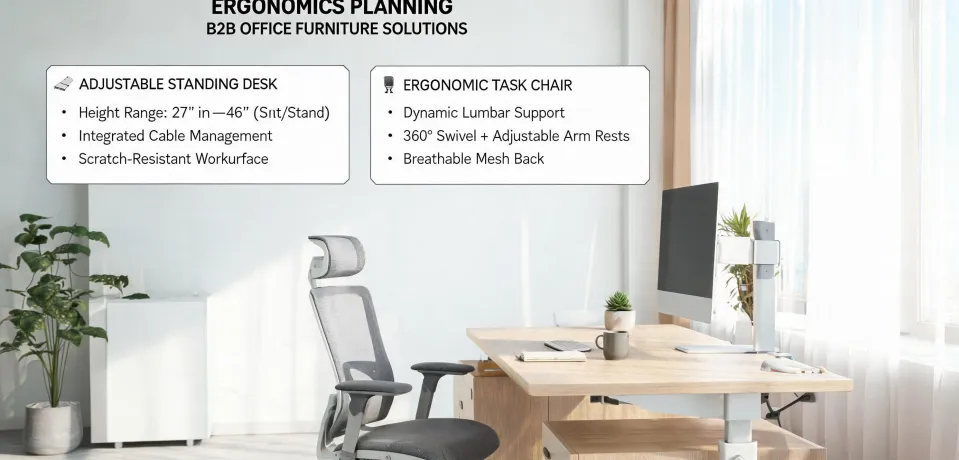
Here's the thing about buying office furniture for a company: the first number everyone looks at is the price per unit. I've been in quality compliance for over six years now (roughly 200+ unique items annually), and I can tell you, that first number is a trap more often than not. The real cost is in what happens after the desk gets installed.
Look, I'm not saying budget options are always bad. I'm saying they're riskier. And for a B2B procurement process—especially one with a deadline—risk has a price. This was the lesson we learned in Q1 2024 when a batch of fixed-height desks from a low-cost vendor showed up with a critical issue: the laminate surface was delaminating along the front edge on 12 out of 50 units. Normal tolerance for cosmetic defects is under 2%. We had 24%.
The Surface Problem (And Why It's Not Just About Aesthetics)
When you're setting up an office, you're usually under a timeline. The lease is signed, the move-in date is set, and furniture delivery is the critical path item. The first problem people think they have is: "We need desks that look professional." And that's true. A delaminating edge on a reception desk doesn't project the right image.
But the deeper issue isn't aesthetics. It's durability and total cost of ownership (TCO). That cheap desk isn't just a bad look now; it's a replacement project in 18 months. Which means you're paying for the desk twice—once upfront, and once again when it fails. Plus the labor cost of swapping it out. Plus the downtime for your team.
What I mean is that the 'cheapest' option isn't just about the sticker price—it's about the total cost including your time spent managing the vendor, the risk of delays, and the potential need for reorders. And—critically—the risk of missing your project deadline.
The Hidden Cost: Time Certainty
In B2B furniture procurement, there's a concept that's often overlooked: the value of time certainty. You're not just buying a desk; you're buying a guarantee that the desk will be there when you need it. After getting burned twice by 'probably on time' promises from budget vendors, we now budget for guaranteed delivery from vendors who have a track record.
I ran a blind test with our procurement team (circa 2023): same desk spec from a premium vendor vs. a budget vendor. The premium desk was $150 more per unit. But 78% of the team identified the premium desk as 'more professional' without knowing the difference. The cost increase was $150 per piece. On a 50-unit run, that's $7,500 for measurably better perception and, more importantly, measurable quality consistency.
The risk with a budget vendor isn't just quality—it's delivery. One of our project managers learned this the hard way. We didn't have a formal approval chain for rush orders. Cost us when an unauthorized rush fee showed up on the invoice because the initial vendor bailed on their timeline. We lost three days and paid $400 extra for a substitute vendor to deliver on time. The alternative was missing a $15,000 event launch.
The Cost of a Wrong Decision
Let's put this in perspective. Say you're choosing between two options for a 50-desk office:
- Option A (Premium): $800/unit. Guaranteed delivery in 3 weeks. Solid laminate, certified thickness, adjustable height mechanism. (This pricing was accurate as of Q4 2024. The market changes fast, so verify current rates before budgeting.)
- Option B (Budget): $650/unit. Estimated delivery in 4-6 weeks. Thinner laminate, simpler mechanism.
The math seems easy: Option B saves you $7,500. But what happens if Option B is delayed by two weeks? Your office opening is pushed back. Your team is working from home longer. Or worse, you're paying rent on an empty space. A two-week delay on a $5,000/month lease costs you $2,500 in dead rent. Plus the lost productivity of your team. Suddenly that $7,500 "savings" is a lot smaller.
Real talk: the problem isn't that budget vendors always fail. It's that you're betting your deadline on a promise with no teeth. And if your project has a hard deadline, "probably on time" is the riskiest bet in the game.
So What's the Real Solution?
The solution isn't to always buy the most expensive option. It's to evaluate your risk tolerance and your timeline.
If your office build-out is flexible—if you have a month of buffer built in—then a budget option might work fine. You have time to manage issues. But if you have a hard deadline (a lease start, a major event, a client visit), then time certainty becomes a valuable feature. Pay for it.
To be fair, premium vendors aren't immune to delays. But their track record for consistency is usually better. And their contracts usually include penalties for missed deadlines. A budget vendor's terms might not even specify a delivery date—just an "estimated window."
Three things to check on your next office furniture RFP:
- Contractual delivery date (not estimated). What happens if it's missed?
- Material specifications. Is the laminate thickness certified? Weight rating for adjustable desks?
- Post-purchase support. What happens if a unit arrives damaged?
Granted, this requires more upfront work. But it saves time later. I learned these vendor evaluation criteria in 2020. The landscape may have evolved, especially with new technology options. But the core lesson hasn't changed: In procurement, the cheapest option isn't the cheapest option. It's the riskiest one.
This was accurate as of early 2025. The office furniture market changes fast, so verify current pricing and lead times before making a decision.

Discuss this article with a workspace planner