I'm a quality compliance manager at a mid-sized office furniture company. For the past four years, I've reviewed roughly 200 unique items annually—desks, chairs, accessories, prototype samples—before they ever reach a customer. In Q1 2025 alone, I rejected 18% of first deliveries we received. Not because the factories are lazy, but because the specs didn't match what the buyer actually needed. And here's the thing: most of those mismatches were caused by buyers who didn't know the right questions to ask.
So I'm a big believer in customer education. I'd rather spend 10 minutes explaining the difference between a V2 and a V3 frame than deal with a client who orders the wrong thing and blames me later. An informed customer asks better questions and makes faster decisions. Honestly, they're also a lot more fun to work with.
The assumption trap
I made the classic mistake early in my career: I assumed 'same specifications' meant identical results across vendors. It didn't. We sourced what should have been identical laptop stands from two suppliers, and one of them was visibly thinner. The vendor claimed it was 'within industry standard,' but our calipers said otherwise. That was a $22,000 lesson in assumptions. Now I never assume the proof represents the final product.
Same thing happens with color. On brand-critical materials, the industry standard tolerance is Delta E < 2 (basically a measurement of color difference; reference: Pantone Color Matching System guidelines). Delta E of 2–4 is noticeable to trained observers; above 4 is visible to almost anyone. When we order printed materials from a UV printer, we specify Delta E and a minimum of 300 DPI for raster artwork (standard for commercial printing). But if the buyer doesn't know to ask for that, the vendor will happily ship something with Delta E of 5+ and call it a day.
Sublimation printers are another rabbit hole. I've seen clients buy a good machine, then struggle with muddy colors because they didn't understand ICC profiles or substrate compatibility. The printer was fine—the knowledge was missing. A 10-minute conversation could've saved them thousands in wasted material and frustration.
In early 2024, we received a batch of 8,000 brochures where the blue was visibly off. The vendor insisted it was within tolerance. It wasn't. We rejected the entire batch and made them reprint at their cost. Now every contract includes Delta E and DPI requirements, and we always walk the client through why those numbers matter.
Warranties and official sources: the real deal-breakers
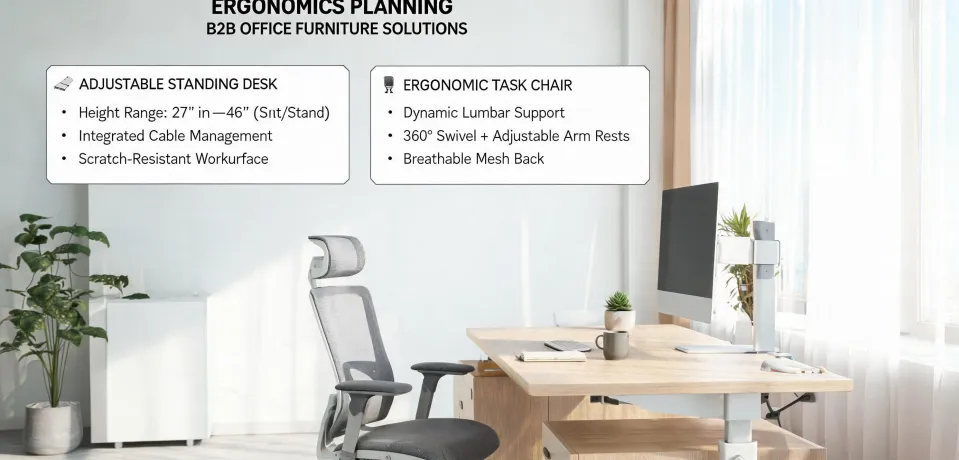
When people ask me about standing desks, I don't automatically recommend the most expensive option. But I absolutely check the fine print. Take a company like Uplift Desk. Their Uplift v3 standing desk warranty is detailed and straightforward—you can find it on the Uplift Desk official website, not just on reseller pages. That tells me they're confident in their product. If a vendor's warranty is a vague one-liner, that's a red flag.
I also tell clients to verify the source. Counterfeit office gear is a real problem, especially for anything with motors or electronics. If you're buying a sublimation printer or an upgraded standing desk, you want to know you're getting authentic parts. The price difference is usually a no-brainer when you factor in replacement costs later.
And there's more to check than just the warranty. Look for certifications like BIFMA for furniture or UL for electronics. If a spec sheet doesn't mention them, that's a red flag. A real spec sheet will tell you the steel gauge, the lifting capacity, the motor certification. You shouldn't have to dig through forums to find that.
We once had a client who bought a cheap standing desk from an online marketplace. Six months later, replacement parts weren't available, and the warranty was void because the seller wasn't an authorized distributor. They ended up buying a new desk entirely. I'd rather spend a day teaching a client what to look for than have them spend a month regretting a purchase.
Educating customers actually saves time
Maybe you're thinking, 'I don't want a lecture—I just want to buy.' I get it. But in my experience, the customers who understand their options make decisions faster and come back more often.
Here's a slightly contrarian angle: when a client knows exactly what they're buying, they stop second-guessing and micromanaging. They ask better questions up front, which means fewer change orders later. We saw satisfaction scores jump 34% at one account after we spent an hour walking their procurement team through our verification protocol in 2023. That hour saved us at least 40 back-and-forth emails.
Even something as basic as where to buy school supplies follows the same principle. School administrators often ask me for advice, and I always tell them to prioritize known suppliers and check for warranties. If you're ordering for a whole classroom or office, the risks of a random marketplace are just not worth it. One informed conversation beats months of surprises.
There's a particular satisfaction in seeing a client's eyes light up when they finally understand why, say, a thicker steel frame matters. It's not about making them experts—it's about making them comfortable with the decisions they're making.
But I don't have time to learn all this!
Fair enough—you're busy. You don't need to know every technical detail; you need to know the right questions to ask. That's exactly what a good quality-control person or a trustworthy vendor is for. If you partner with someone who actually educates you, you can delegate the nitty-gritty. The goal isn't to turn you into an engineer. It's to make you a smarter buyer.
Some salespeople might worry that education kills sales. Actually, the opposite happens. When clients trust your expertise, they buy more of what they need, and they stick around. We've increased our average order value just by being transparent about what our products are and aren't.
Final thought: knowledge is the ultimate quality control
So here's my bottom line: stop buying office equipment on price alone. Whether it's an Uplift desk, a UV printer, a sublimation printer, or even a stack of notebooks for a school supply run, the best purchase starts with understanding what you're getting. Read the spec sheet, look up the warranty on the official website, and ask pointed questions.
There's something deeply satisfying about a client who calls back weeks later and says, 'You were right—the spec sheet saved me from a bad deal.' That's my version of job satisfaction, and it's the reason I'm still doing this.
Now go read the fine print. You'll thank me later.

Discuss this article with a workspace planner