I manage office furniture and supplies for a 40-person marketing agency. That means I'm the person who places the orders, unboxes the shipments, and answers the “where's my desk?” emails. My buying budget runs roughly $120,000 a year across eight vendors, and I've placed more sit-stand desk orders than I can count. This checklist is for anyone about to buy an Uplift desk for themselves or for a team.
I'll keep the background short. Here are the seven steps I use, plus the mistakes I've made so you can skip them.
1. Match the Product to the Person
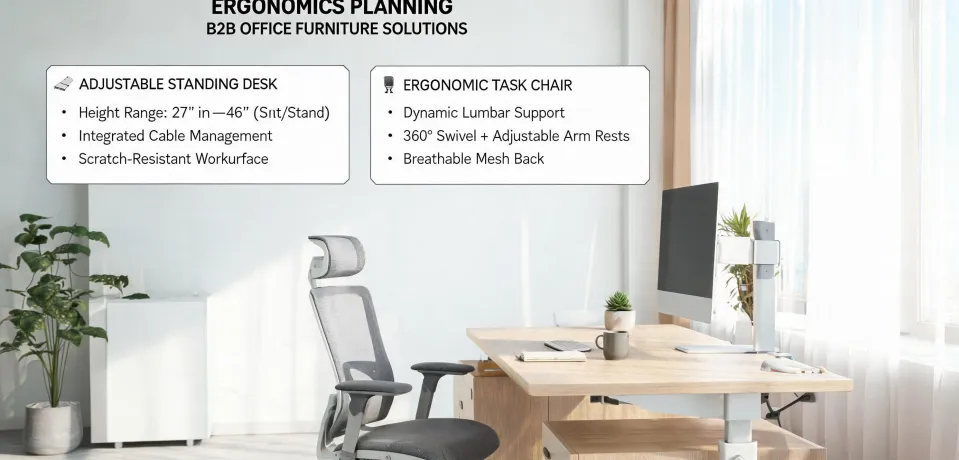
Not everyone needs a sit-stand desk. Some employees want one because they heard it's healthier; others have a specific back discomfort. I've learned to ask about their current chair first. If they don't know what a lumbar lock is, start with an ergonomic chair. The Uplift desk ergonomic chair combo is what I order when someone is restless but not ready for a full conversion. The chair gives them support; the desk gives them movement. One without the other is usually a wasted purchase.
2. Measure More Than the Office
In 2023, I measured an office layout carefully and forgot to measure the freight elevator. The desk box barely fit and cost us an afternoon of grumbling. Later I found a similar one at another location—the one I had to send back. I knew I should check the elevator dimensions, but I thought, “what are the odds?” The odds caught up.
Before you order, use a cubic feet calculator to understand what you're dealing with. Uplift publishes packaged dimensions for every desk. Convert inches to cubic feet and compare against elevators, stairwells, and doorways. A typical standing desk box runs 10-12 cubic feet; a curved corner desk can take up a lot more. Don't eyeball this.
For smaller accessories that need to go to another office, USPS is the cheapest route. According to USPS pricing effective January 2025 (usps.com/stamps), a First-Class Mail large envelope costs $1.50 for the first ounce and $0.28 for each additional ounce. That beats a $15 UPS minimum for cable clips and grommets.
3. Pick the Frame That Matches the Work
The Uplift V3 standing desk frame is the workhorse in our office. It's heavier and stable enough for three monitors plus a laptop arm. If the employee only uses one laptop, the standard V2 frame is fine—and cheaper. Don't let anyone upsell you if you don't need it.
For corners, we've ordered both L-shaped and curved corner models. The curved edge gets noticed; it's a small luxury that people comment on. But it has a longer lead time, so plan accordingly.
I have mixed feelings about customization options. On one hand, giving employees a choice of laminate colors makes them feel heard. On the other hand, every custom size creates a new SKU that I have to track. A compromise that works: standardize the frame size and let people choose the top color. That keeps procurement simple without making the office feel like a cookie-cutter showroom.
4. Create an Unboxing and Setup Routine
We didn't have a formal unboxing process for the first two desk orders. On the third, a missing cable tray wasn't noticed until two weeks later. That's when I made a checklist: check the box, photograph the contents, and confirm the parts list before the installer leaves. It sounds obvious until you're looking at a half-built desk with no idea what's missing.
Also think about network access before you move furniture. We rearranged a few workstations to fit more standing desks, and suddenly the printer was on the other side of the room. If you've ever asked “how to get my printer online” after moving furniture, you know the exact issue. Include Wi-Fi coverage and network port locations in your layout plan first.
5. Don't Skip the Small Accessories
The surprise wasn't the desk itself. It was how much the little pieces mattered. A mat, a monitor arm, and a cable tray can make a good desk feel polished. A cable tray, honestly, is the rare beauty highlighter of our office—not the makeup kind, but the small thing that makes everything around it look better. When it's missing, people notice the wires before they notice the furniture. Never expected a piece of metal under a desk to get so much appreciation, but here we are.
6. Plan Delivery and Handling
A standing desk does not arrive in a cardboard envelope. It comes on a pallet. Freight carriers call ahead, ask about loading docks, and sometimes leave the pallet at the curb if no one's ready. Have a plan.
This is where a cubic feet calculator becomes your friend again. Freight quotes often use dimensional weight, which means volume matters. A box that measures 65" × 30" × 10" is about 11.3 cubic feet. The difference between 11 and 12 cubic feet may not matter. The difference between 10 and 20 definitely will.
And don't compare desk prices alone. Total cost of ownership includes freight, liftgate fees, inside delivery, and the hour you lose waiting for a driver who won't carry a 180-pound box up stairs. Ask “What additional fees are not in the quote?” before you approve the PO.
7. Document Everything for Finance
A vendor once gave me a handwritten receipt. We'd worked together for years, so I didn't push for a formal invoice. Finance rejected the expense, and I absorbed $2,400 from the department budget. Now I verify invoicing capability before any order, even for people I trust.
For every Uplift desk order, save the quote, the order confirmation, the freight bill, and the final invoice. Keep the serial number and model name for asset tracking. If your finance team is picky, this saves hours of email hunting later.
Final Notes: Common Mistakes
Don't promise health outcomes
I'm not an ergonomist, and I do not recommend acting like one. If an employee asks, “Will this fix my back pain?” the right answer is: “It gives you the option to move. For medical advice, please see a specialist.”
That boundary is not a weakness. Per FTC advertising guidelines (ftc.gov/business-guidance/advertising-marketing), health claims need evidence. And a vendor who says “that's outside our scope” earns more trust than one who promises everything. I'd rather work with a specialist who knows their limits than a generalist who overpromises.
Order one desk before outfitting a whole floor
If you're planning 12 desks, order one first. Put it in a shared area for two weeks. Let people try it. Listen to what they say—not to what you hope they'll say. That single trial saved us from ordering the wrong size for everyone.
Treat this as a long-term system, not a one-time purchase
People change jobs. Office layouts change. Uplift desks are modular, so buying a few compatible accessories and spare parts now is worth it. But don't buy everything on day one. Establish a standard, document it, and add as the team grows.
That's the whole checklist. It's not glamorous, but it gets the job done—and after the desk is set up, no one thinks about the furniture. That's exactly how it should be.

Discuss this article with a workspace planner