Quick Answers
- Is an Uplift Desk worth the extra money?
- How bad is the Uplift Desk manual?
- Which Uplift Desk ergonomic chair should you buy?
- What hidden costs should you budget for?
- What accessories actually matter?
- What's the weirdest request I've handled?
1. Is an Uplift Desk worth the extra money?
Look, if you compare only the ticket price, an Uplift Desk is not the cheapest option. But I don't price office furniture by ticket price anymore. I price it by total cost: what you pay, what it costs to assemble, what it costs to support, and what it costs when it fails. An Uplift V2 or L-shaped V3 will run anywhere from $600 to $1,600 depending on size and options. A no-name standing desk can be $250. But that $250 frame usually comes with shipping fees, a controller that may die in a year, and a return process that eats your time. The total cost of the cheap desk is often higher. Honestly, I'm not sure why some budget brands keep selling these frames with such inconsistent quality. My best guess is they don't own the warranty. With Uplift, I'm paying for predictability. For a B2B rollout, that's worth more than the price difference.
2. How bad is the Uplift Desk manual?
I've assembled a lot of desks—Uplift and otherwise—and I'll be honest: I assumed the manual would be one of those picture-only nightmares. It's not. The Uplift Desk manual is long, but it's precise. Every part is labeled, and the hardware bag includes matching labels for each step. That doesn't mean you should wing it, though. The process is straightforward, but the desktop is heavy and the frame is awkward to flip solo. Plan 45 to 90 minutes with two people. Keep the manual after assembly. You'll need the hex key sizes when you adjust a monitor arm or remount a grommet later. Last month, I helped an office manager over the phone because she'd lost the manual and needed the bolt length for a power strip bracket. I still had mine. That's the kind of paperwork that saves an afternoon.
3. Which Uplift Desk ergonomic chair should you buy?
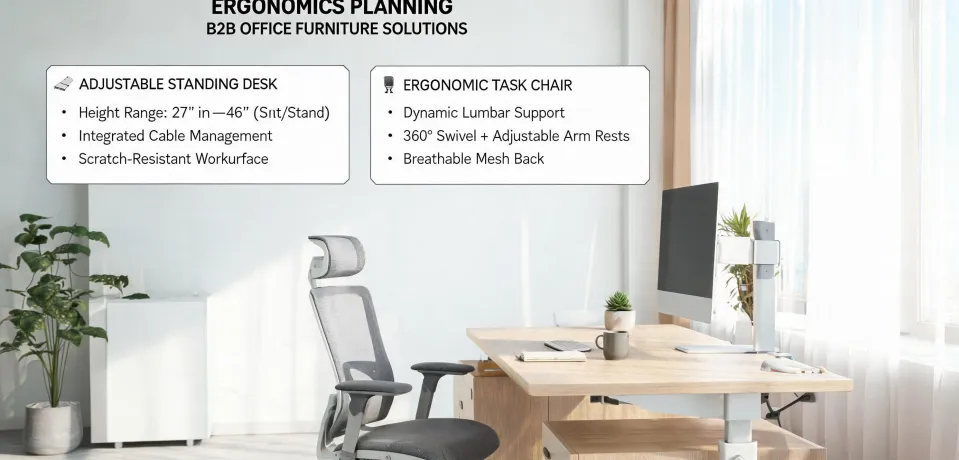
For most offices, I'd start with the J3 if you want support without a lot of flash, or the Pursuit for taller users. The Facet is the nicer-looking one, but mesh isn't everyone's preference. I made that mistake with another chair brand a few years ago: it looked great in the catalog, and the pilot user hated it after week two. The best approach is to test one chair for a week before buying ten. Uplift's return policy makes that easier than it used to be. Also remember that a standing desk doesn't fix a bad chair. The chair and the desk work together. If you're pairing an Uplift Desk with an old chair that's too low or too tight, the desk isn't going to save you. Budget for both.
4. What hidden costs should you budget for?
I use the same formula for desks that I use for rush printing: base price plus shipping, setup, and risk. With Uplift, shipping is usually straightforward and the quoted price is close to the actual price. There is still the accessory rabbit hole: anti-fatigue mats, cable trays, monitor arms, power strips. Those are real costs. On the other side, a budget desk can come with surprises. In March 2024, 36 hours before a client's office launch, two cheaper frames arrived with drill holes that didn't line up. We paid $190 to a local handyman just to make them work. The client's alternative was missing the launch date and the $50,000 penalty attached to it. Based on publicly listed prices from major online sellers in January 2025, budget standing desks still show up below $300, but that price doesn't include the fix-it call. I now calculate total cost before comparing any vendor quotes.
5. What accessories actually matter?
For a sit-stand desk, a good anti-fatigue mat matters more than you think. Your legs will tell you quickly. A cable management tray is worth it because the underside of the desk becomes a spiderweb if you skip it. Monitor arms help if you're short on square inches. But the accessories I keep forgetting are the non-furniture ones. When I'm outfitting a workspace, I've learned to keep a small supply stock, because the craziest requests always come at 4 p.m. We didn't have a formal accessory checklist until a $58 same-day delivery fee for a $7 pack of cable clips. Now the checklist includes everything from packing tape to construction paper. No, not every office needs construction paper. But if you're in a school, training center, or event company, it's a $4 emergency that becomes a $40 emergency when you don't have it.
6. What's the weirdest request you've handled?
In March 2024, a client called 36 hours before a workshop needing 200 sheets of construction paper and a calculator watch for a promo video—not a smartwatch, an actual calculator watch. I found both, but the rush shipping on the watch cost more than the watch. Another time, an office manager asked me how to eyedropper convert a fountain pen. I'd never done it, but the answer is: put a thin layer of silicone grease on the barrel threads, fill the barrel with ink, and screw it together slowly. It's messy. Overfill it and you'll need a towel and possibly a new desk mat. My point isn't that you'll need to know that. My point is, no Uplift Desk setup is complete until you think about the whole workspace. The desk is the anchor. The chair is the support. The weird little supplies are the stuff that becomes urgent when you least expect it. Budget a small contingency for all three.

Discuss this article with a workspace planner