-
Who This Checklist Is For
-
The 6-Step Cost Checklist
-
Step 1. Define the workstation, not the desk
-
Step 2. Build a line-item quote, not a “desk price”
-
Step 3. Add freight, delivery, and installation before comparing options
-
Step 4. Run the calculators: CRCL, CPM, and buy vs rent
-
Step 5. Verify warranties, replacement parts, and support before you sign
-
Step 6. Make the buy-vs-rent decision after tax and resale value
-
Step 1. Define the workstation, not the desk
-
Common Mistakes I’ve Made Myself
-
The Bottom Line
Who This Checklist Is For
I’m the procurement manager at a 42-person medical equipment distributor. I manage a roughly $180,000 annual facilities budget, and I’ve spent the past six years tracking every furniture invoice in our cost system. This checklist is for you if you’re about to buy Uplift desk medical office furniture—or any sit-stand workstation—and you don’t want to learn the hard way what the quote did not include.
The trigger was Q2 2024. We expanded from 9 exam rooms to 14, and I approved a quote for 12 desks. The quote looked fine. Then the freight bill came. Then the installation crew’s bill came. Then the cable-management add-on that I forgot to include came out of my contingency budget.
I wrote this checklist after that. It has six steps. Do them in order, and you’ll catch most of the cost issues before they hit your purchase order.
The 6-Step Cost Checklist
Step 1. Define the workstation, not the desk
Before you open the configurator, write down who will use each desk and what happens on it. A medical reception station is not the same as a billing workstation, and a shared nurse-midpoint desk is not the same as a doctor’s private office.
- Dedicated or shared? Medical staff often share workstations across shifts. Shared desks need more durable surfaces and often more adjustment cycles.
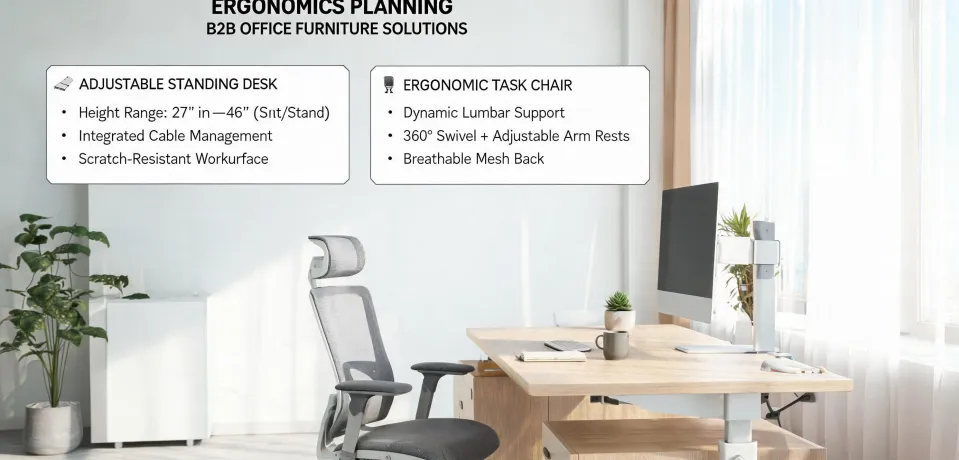
- Height range? If you have staff from 5’0” to 6’4”, you need a frame that covers that range. The Uplift V3 standing desk frame is a frequent choice because it gives you both height range and load capacity.
- Add-ons? Monitor arms, cable trays, casters, and standing mats. These are not accessories. They’re part of the total cost of ownership.
This step is boring, but it prevents the most expensive mistake: buying 12 desks and realizing you actually needed 10 desks plus 2 different layouts. Checkpoint: you can name the user, the job, and the room for every desk on your list.
Step 2. Build a line-item quote, not a “desk price”
Get a quote that lists the frame, the top, the finish, the legs, the grommets, the cable tray, and every option. The Uplift configurator makes this easy. Easy doesn’t mean you should skip the review.
In 2023, I compared quotes for 20 desks from three vendors. The lowest line-item price was 11% cheaper than the next one. When I compared the two quotes side by side, I finally understood why line items matter: the cheaper quote didn’t include freight, used a shorter warranty, and had a lower load capacity. That’s the kind of difference that hides in the fine print.
Pay special attention to the frame. The Uplift V3 standing desk frame is often the most durable part of the system, but only if you spec the right height range and load capacity for your team.
Step 3. Add freight, delivery, and installation before comparing options
This is the step I skipped in 2024. I knew I should have asked about white-glove delivery, but I thought, “how much can it be?” That was the one time it mattered. The freight and setup fee turned out to be $2,100 for one order.
Medical office furniture also has to be installed safely. If you’re putting sit-stand desks in exam rooms, you may need to move existing equipment or coordinate with the clinic manager. Include that coordination time in your plan. A $400 “free delivery” offer can become a $1,200 project when the crew has to come back a second time.
Step 4. Run the calculators: CRCL, CPM, and buy vs rent
This is the step most people ignore, and it’s where the real numbers show up.
Our procurement team uses a CRCL calculator—cost, risk, compliance, lifecycle. It’s not an official industry standard; it’s a spreadsheet I built after getting burned on hidden fees twice. It includes warranty risk, replacement probability, cleaning requirements, and expected life. You can build something similar even if you call it a “TCO spreadsheet” instead.
Then convert the total cost to a cost per month. CPM = total cost ÷ expected useful life in months. If an Uplift desk setup costs $1,400 including accessories and lasts 7 years, that’s about $16.67 per month. A “cheaper” $1,000 desk that lasts 3 years is $27.78 per month. The cheap option is not always the no-brainer. If your team prefers a ready-made tool, a simple CPM calculator does the same math.
If you’re comparing a lease or rental, run a separate buy vs rent calculator. Put in the purchase price, expected resale value, monthly rent, and your cost of capital. A low monthly lease payment looks good until you see the total over five years.
Step 5. Verify warranties, replacement parts, and support before you sign
Most desks come with a warranty, but “warranty” means different things. Ask these questions:
- What is the frame warranty, and does it cover commercial medical use?
- What is the electronics warranty for motors, controls, and cables?
- What is the surface warranty for laminate or paint?
- Are replacement parts available after the warranty ends?
As of July 2025, Uplift publishes warranty terms on each product page. Check the current terms for the Uplift V3 standing desk frame, the motor control box, and the desktop laminate. Don’t assume a consumer warranty covers a multi-shift medical office. If it doesn’t, that’s a red flag.
The way I see it, warranty length is part of the CPM. A frame that lasts 5 years is not the same asset as a frame that lasts 10 years, even if the initial price is identical.
Step 6. Make the buy-vs-rent decision after tax and resale value
For a permanent medical office, buying an Uplift desk is usually the better total cost. But “usually” isn’t “always.” A temporary clinic, a 9-month project, or a space under lease renewal might be better served by renting.
Run a buy vs rent calculator with these inputs:
- Purchase price and sales tax
- Delivery, installation, and setup
- Expected maintenance or repair costs
- Resale value at the end of your planning horizon
- Monthly rent and rental insurance
If a desk rents for $50/month and you only need it for 6 months, that’s $300. Buying the same desk for $1,400 makes no sense unless you have a 7-year use for it. Match the life of the asset to the life of the need.
Common Mistakes I’ve Made Myself
Using the sticker price as the “cheaper” price. We once saved $80 by skipping expedited shipping on an order, then spent $400 on a rush reorder when the standard delivery missed our deadline. Net loss: $320.
Forgetting that people use desks differently. A 25-inch height range may be perfect for one person, but a shared medical station has to fit the whole staff. Spend the extra time to specify the actual users.
Not checking the room layout. We ordered L-shaped desks for a room that didn’t have enough turning radius. The rework cost $1,200. Five minutes with a tape measure would have caught it.
Treating ergonomic accessories as nice-to-haves. A standing desk without a mat is not the same desk. Add mats, monitor arms, and keyboard trays to your CPM calculation.
The Bottom Line
Five minutes of verification beats five days of correction.
I’m not 100% sure which calculator will catch your specific mistake, but I know the right process: state the need, build a line-item quote, add the hidden costs, and run the numbers over the life of the asset.
If you’re buying Uplift desks for a medical office, you’re already looking at a premium product. That’s fine. Just make sure you’re comparing total cost over the life of the workstation, not the line-item price.
There’s something satisfying about a workstation that arrives on schedule and works without surprise change orders. That doesn’t happen by luck. It happens because somebody checked the list.

Discuss this article with a workspace planner