The problem isn't the price. It's the denominator.
In my role coordinating office furniture for medical clients, I've handled 200+ rush orders over the last five years. The first thing I ask isn't "How many desks?" It's "How long will this space be yours?"
That question sounds simple, but it's the one nobody asks on the first call. A clinic manager usually calls because they've already seen an Uplift Desk quote and a rental quote. They want me to help "make it work." The first thing I do is open a buy vs rent calculator.
In March 2024, a behavioral health clinic needed 14 height-adjustable Uplift desks for a new location opening in 11 days. Normal lead time was three and a half weeks. Their landlord allowed one week for furniture installation. The initial rental quote was $4,150 lower than buying. On paper, it looked like an easy answer.
It wasn't.
Why the obvious comparison is wrong
Most buyers compare a purchase price to a monthly rental rate. That seems logical. But rental and purchase are not the same kind of expense, and they don't have the same denominator. A purchase is spent once, over the life of the asset. A rental is spent monthly, but it also carries setup, maintenance, damage waivers, and end-of-term return responsibilities. If you only look at the free quote, you're basically comparing apples to hand grenades.
The question everyone asks is "What's your best price?" The question they should ask is "What does this desk actually cost me every month it's in my building?"
That's where a CPM calculator comes in. I maintain a simple CPM—cost per month—spreadsheet for every proposal. Total cost, including installation and projected maintenance, divided by the number of months the desk will be in service. That's the number that matters.
For a medical office, the CPM comparison often looks different than people expect. A fixed-height reception desk is cheaper up front. But if it doesn't fit the different nurses, aides, and physicians who work across multiple shifts, it creates a permanent mismatch. One height-adjustable workstation can be shared by a 5'2" phlebotomist and a 6'3" radiologist without complaints. The CPM can be lower because the usable hours are higher.
This isn't a guarantee that every person's back pain disappears. It's a simple capacity argument: a desk that adjusts to the user is more likely to be used by more users. Medical offices are not normal offices. A nurse who triages, draws blood, and charts is bouncing between a computer, a phone, and a patient. One fixed desk height means someone is constantly leaning, lifting, or craning. The right desk height isn't a comfort feature; it's a workflow problem.
The hidden trap: lease terms and capital recovery
If you're renting for a six-week pilot, rent. I'll tell you that on the first call. But if you're signing a 24-month lease on furniture for a clinic you expect to run for five years, you need something more detailed than a simple buy vs rent calculator.
I started using a CRCL calculator—capital recovery cost of lease—after a 2023 project went sideways. The client saved $17,200 on the quoted "rental" cost of a complete medical office fit-out. But the lease had a 36-month minimum, a $750 annual maintenance fee, a non-negotiable cleaning charge at move-out, and a restocking fee equal to 11% of the original product value. The end-of-lease cost ate up most of the "savings." We didn't miss the deadline, but only because we paid $1,900 in rush charges to undo an avoidable problem.
That's the part I don't see on marketing pages. A CRCL calculator does one thing: it gives you the net cost of exiting a lease. It includes the buyout, the removals, the restocking, and the time your staff loses coordinating the pickup. Forgetting that final line item is how smart people sign bad contracts.
To be fair, this isn't true for every rental agreement. There are vendors with fair month-to-month terms and no hidden exit fees. And there are situations—short grant-funded studies, temporary departments, uncertain headcount—where renting is the correct answer. You just can't know without calculating the full contract.
The cost of guessing
My job is triage, so I see the failure cases. Last quarter alone, I processed 47 rush orders. Most of them were not because a clinic needed more desks. They were because someone had already chosen the "cheaper" route and it didn't hold up.
A corporate client lost a $50,000 grant-funded project because their rental furniture vendor couldn't install in the lab window. Another clinic called us two days before opening, after their budget furniture order arrived with a damaged leg and no replacement available. We rushed an Uplift V3 standing desk frame next-day air, and the setup team stayed until 11 PM.
The rush fee itself was only $350. But the real cost was the stress, the contractor coordination, the last-minute safety review, and the fact that nobody slept. That's why I always ask about the worst case. The worst case isn't a late desk. The worst case is a clinic that can't open because a desk decision was made on sticker price.
A practical method before the deadline
If someone asked me to set up a medical office tomorrow, I'd spend twenty minutes with three tools before ordering anything:
- A CPM calculator to turn every option into a monthly cost over actual usable life.
- A CRCL calculator to check the cost of exiting any lease or rental arrangement.
- A buy vs rent calculator to compare the cumulative cost at the 12-month, 24-month, and 60-month marks.
Then I'd make the call. If the term is shorter than 18 months, rent the desks and move on. If the term is longer than 18 months, buying an Uplift Desk is usually the better total cost—not because of the brand name, but because the cost per month gets spread over years instead of weeks.
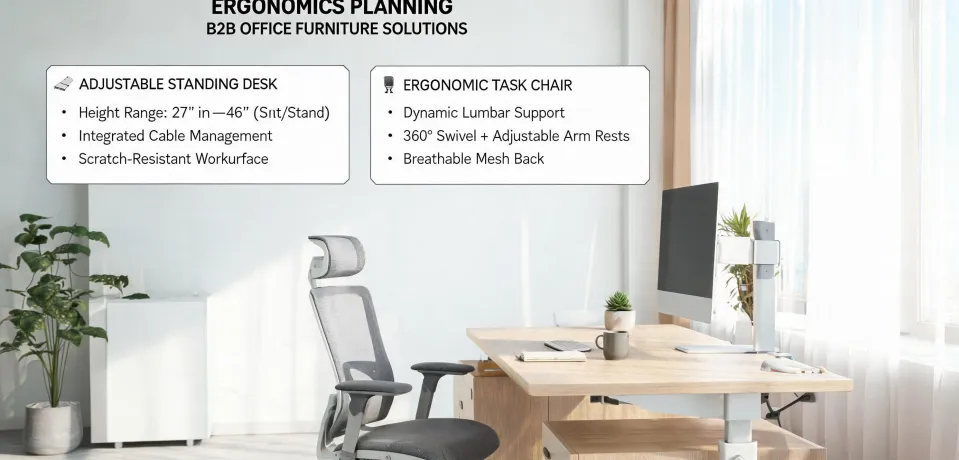
That's how I look at Uplift desk medical office furniture. It's not a premium label. It's a system that has to handle strange hours, spills, and bodies of every size. The adjustable frame is the part that makes it useful to different staff, and the V3 standing desk frame is what I'd spec for a shared workstation.
When people search for "Uplift desk medical office furniture," they're usually looking for a product spec. I look at it differently: the spec only matters if it survives the actual conditions of a medical office. That's why the numeric method above isn't a sales pitch. It's a checklist.
Once the desks are installed, the whole conversation becomes boring. In my world, boring is a compliment.

Discuss this article with a workspace planner