Cheapest Wasn’t Cheaper
Nobody gets fired for buying the lowest-priced standing desk. That's what makes it so dangerous. The cost just shows up later — quietly. The frame wobbles at standing height. A lift column fails in month 14. The controller board dies and you spend six weeks waiting for a warranty replacement. Suddenly your “budget” desk has cost more than the premium one, once you count the downtime and the frustration.
I'm the procurement manager at a 40-person medical office. I've managed roughly $180,000 a year in office spending for the past six years, and furniture is the category I've audited most carefully. When we outfitted our second satellite clinic in summer 2024, I almost made a classic rookie error. It changed how I evaluate office furniture.
Here's my opinion, stated flatly: if your office runs on schedules and deadlines, you should pay for certainty, not just the lowest price. A standing desk isn't the product you're actually buying. The product is knowing that it shows up on time and keeps working.
The Quote That Almost Fooled Me
The new clinic had 18 clinical and administrative staff. The opening date was locked: September 16, 2024. The first patient appointments were already on the calendar for Monday morning, and in a medical office, “we'll get to it when we get to it” isn't a thing.
I sent specifications to five vendors and asked for quotes on sit-stand desks, chairs, and accessories. One online wholesaler came back $421 per desk cheaper than the Uplift V2 configuration I had in mind. Multiply that by the 18 desks we needed, and you're looking at almost $7,600 in savings. For someone whose job is guarding the budget, that number gets your attention.
I was about to sign the purchase order when I did something boring: I read the fine print while waiting for a conference call to start.
What the spec sheets didn't say
- The cheaper desk used a single-stage lifting column rated for 6,000 cycles in the vendor's own component specifications. The V2's dual-stage frame is tested to 20,000 cycles — verify current specs on Uplift's site, but that's the number that drove my decision.
- The warranty required the buyer to pay return freight on any defective frame. Freight on a 70-pound box isn't free; it can easily run a couple hundred dollars.
- Delivery was estimated at 15–20 business days, “subject to carrier availability.” I've been in procurement long enough to know that phrase commits the vendor to absolutely nothing.
Then I did the actual math. If the desks arrived even two weeks late, 18 staff members would be without workstations. We would still pay the nurses and schedulers, but we couldn't run the clinic at full capacity. My rough estimate: a two-week delay would cost us around $24,000 in lost revenue. Let me rephrase that. The $421 per desk I was saving could have cost us $24,000 in a single stroke. The decision made itself.
The Ergonomics Line Item Most Buyers Skip
Medical offices aren't warehouses. Our staff aren't lifting boxes; they're sitting at workstations for eight or ten hours at a stretch, documenting patient care, coding visits, handling phone calls. Back and neck discomfort shows up in workers' comp records and sick days. Those are line items I have to watch.
Before the purchase, I searched for “uplift desk medical office furniture reviews” and read what came up, same as everyone. Then I did something slightly less typical: I called our workers' compensation administrator and asked for ergonomic complaints over the last three years. We've had 14 — maybe 15, I'd have to check the spreadsheet. That's not a crisis, but it's a signal.
General ergonomic guidance from OSHA (osha.gov/ergonomics; accessed June 2025) points to static posture as a risk factor and adjustable workstations as one sensible countermeasure. I'll take a regulator's guidance over a furniture brochure any day.
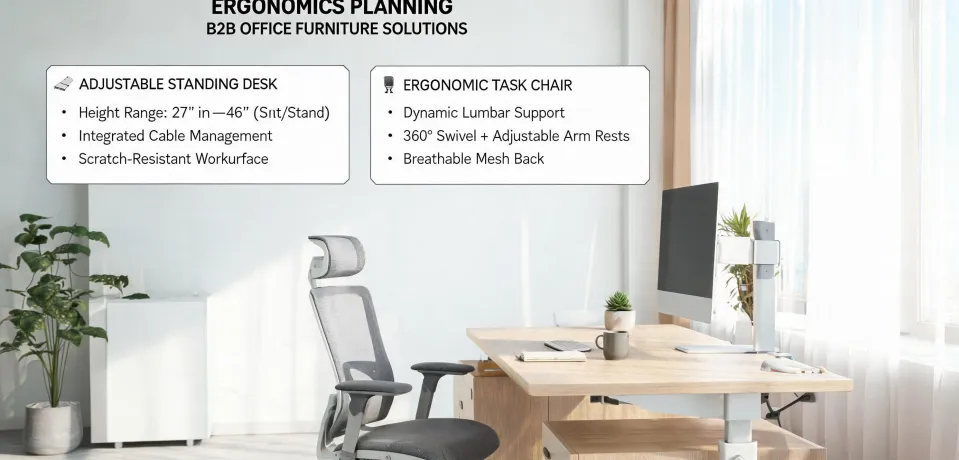
So we paired the V2 desks with ergonomic office chairs from Uplift — the J3 for clinical stations and the Pursuit for the front-office team. Yes, they cost more than the $200 task chairs we'd bought in previous years. But the J3 doesn't need replacing every 18 months — at least, that's been my experience with the 40 or 50 chairs I've tracked through our procurement system since 2019. And when something does need a part, their support team actually answers the phone. That's worth real money when a chair fails in the middle of a work week.
One tool made this easier: Uplift's discount calculator. I don't trust a sales rep's rough quote; I want line-item numbers. Their calculator let me price our exact configuration — desk sizes, laminate finishes, frames, monitor arms, cable trays. It turned my vendor comparison into apples-to-apples math instead of a guessing game.
It's Never Really the Desk
The week before we opened, everything that could go wrong did. Painters finished late. The network installer didn't label the wall jacks. The medical records system wouldn't talk to the printers. I heard the same question four times in one afternoon: “how do I get my printer back online?”
The printer was fine, of course. Nobody had reconfigured it for the new network segment. Everyone blamed the printer because it was the only thing they could see. But the printer wasn't the problem — the integration was.
That's how I think about standing desks now. The desk itself is simple: frame, top, controller, legs. Failure clusters around the edges. A delivery date that slips. A missing cable tray that's backordered for three weeks. A warranty department that makes you ship the entire frame back before it will send a replacement part. Those are integration failures, and they're what actually cost organizations money.
This is also why we ordered the V3 curved corner desk for our two lead physicians instead of the cheaper equivalent. The V3's curve brings a three-monitor setup into comfortable reach without requiring a giant mount. But honestly? I chose it because Uplift gave us a delivery date in writing, and their support team answered a pre-sales question in under an hour. That told me more about long-term reliability than any spec sheet.
People often ask about the Uplift V3 standing desk buy price and stop there. I get it. But the number on the invoice tells you nothing about what the desk will cost in year two — and that's the number that actually matters.
Am I Just Rationalizing the Higher Price?
Fair question — and I'd ask it too. I'm the person who builds a total-cost-of-ownership spreadsheet before buying paper towels. I can tell a purchasing decision from a rationalization.
Here's my honest answer: I'm not saying Uplift is the right call for every buyer. If you're a freelancer furnishing a home office and you have time to assemble, troubleshoot, and pack up a return if needed, a cheaper adjustable desk might make perfect sense. My math only works for organizations where downtime has a clear dollar value — most medical offices, law firms, agencies, or any business with client deadlines.
I also expected to negotiate. I've cut vendor pricing by 15–20 percent just by asking. Uplift's pricing was firmer. But when I totaled the full volume order and ran it through their discount calculator, we reached a number that fit the budget. It wasn't the cheapest number. It was the most defensible one.
And yes, I second-guessed myself after approving the purchase order. I hit “submit” and immediately wondered whether I'd just spent eleven thousand dollars more than I needed to. I didn't fully relax until the desks showed up on the date they promised — actually, a day early. Then I relaxed a lot.
The Bottom Line
The clinic opened on September 16 without a single workstation issue. The desks arrived a day early, assembly was straightforward, and nobody had to document patient care from a folding table. I can't prove the cheaper vendor would have failed us. Maybe it would've been fine. But I've been in this role long enough to know that “probably fine” is the most expensive phrase in procurement.
When the cost of being wrong is high, you're not paying extra for a desk. You're paying for certainty — that it arrives on time and keeps working. That's a budget line I'll defend every time.
Prices and specs change over time. The figures above reflect quotes from our June 2024 purchase; verify current pricing and product details at upliftdesk.com before you commit your own budget.

Discuss this article with a workspace planner