It starts with a simple question
Last spring, our ops director asked me to spec out a few sit-stand desks for a floor renovation. “Just compare the Uplift V2 4-leg standing desk and the Uplift curved corner standing desk,” she said. If you’ve ever been asked to choose office furniture for other people, you know that a simple request is never simple.
I’m the office administrator for a 140-person company. Since taking over purchasing in 2020, I’ve managed roughly $300,000 a year in orders across ten or so vendors, and furniture requests land squarely on my desk. So do the other questions nobody wants to own: how to get the printer back online, whether we can order a bulletin board for compliance deadlines, and (on one memorable afternoon) where the ABV calculator spreadsheet from the holiday party went. That’s basically the job.
Maybe you start the same way I did: type “uplift-desk” into a search engine, read a few reviews, open the configurator, and assume the choice will reveal itself. It doesn’t. After a week of comparing top materials and frame colors, I realized the question “which model is better” was the wrong place to start.
The real problem is what you don’t measure
Here’s what you need to know: a standing desk is not one product. It’s a frame, a top, a height controller, motors, stability characteristics, and a dozen options that only matter in relation to the person using it and the room it’s going into. When you shop by model name, you compare the wrong things.
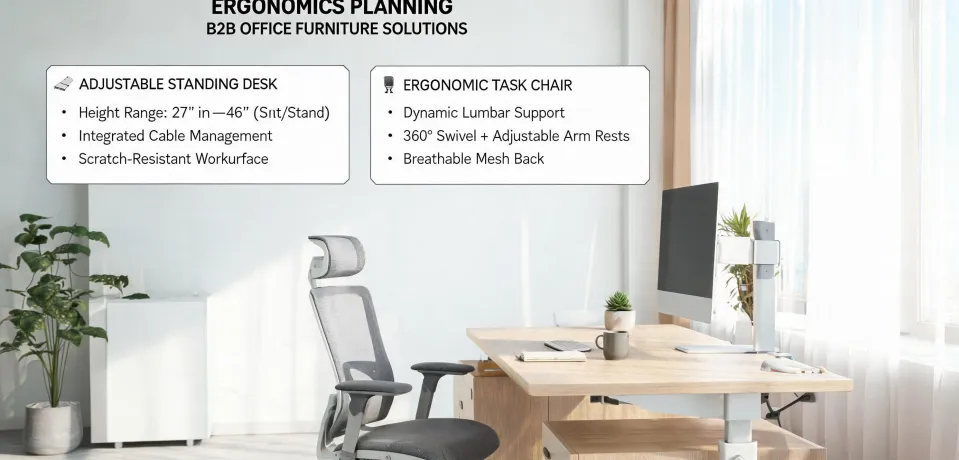
The 4-leg frame isn’t automatically better because four legs seem stronger than two. It’s the right choice when a desk will spend a lot of time at standing height with heavy gear on top—multiple monitors, a monitor arm, a beefy laptop dock—and when the person using it is tall enough that small amounts of wobble become noticeable. The curved corner isn’t just a style upgrade either. It’s about turning an awkward corner into usable work surface and letting someone sit in the corner without fighting a sharp edge. But neither advantage matters if you haven’t checked the basics first.
On my first sit-stand project, we didn’t. We picked a popular frame, a nice top, and crossed our fingers. Then one of the tallest engineers in the company sat down, raised the desk, and watched his monitor wobble. I could tell myself the desk met a spec, but the real spec was “this needs to feel solid when a 6-foot-3 person leans on it.” A BIFMA stability test is a useful floor—most quality desks pass something like X5.5 for desk products—but passing a standard doesn’t tell you how rigid a frame feels at maximum height.
The deeper issue is that we bought a product before defining the problem. A height-adjustable desk is only useful if it actually gets adjusted. Cornell’s ergonomics guidance has made this point for years: adjustability is a tool, not a magic solution. If the desk shakes, if the height range doesn’t fit the user’s body, if the corner shape makes the monitor arm hard to place, people set it once and leave it. Then the money was spent for nothing.
What a wrong desk order actually costs
My first desk rollout taught me the financial version of this lesson too. This was back in 2022, and a vendor’s per-unit price looked genuinely competitive. We ordered 18 desks based on that number. What didn’t show up in the quote was freight, liftgate delivery, and the assembly visit. The invoice landed $2,400 over the approved budget—small enough to be embarrassing, large enough that finance noticed. I ate it out of the department budget, and I’ve asked a different question ever since: “What’s NOT included in this price?” before “What’s the price?”
I’ve never fully understood why some furniture sellers keep delivery fees off the initial quote. My best guess is it makes a proposal look smaller in a comparison spreadsheet, but it doesn’t make the final cost smaller. For an office buyer, the number that matters is the total out the door—including delivery, old furniture removal, and anything that requires a second appointment. The vendor who lists those fees upfront, even when the total looks higher, is usually the one who costs less in the end.
The behavioral cost is harder to quantify. If a so-called standing desk wobbles or the configuration doesn’t fit the space, employees stop standing. Some of them start joking that ergonomics is a scam. That skepticism follows you into the next budget cycle, when you try to fund proper chairs or sit-stand accessories for the rest of the office. It took us months to rebuild trust after our first rollout.
How we actually decided
On the recent project, I did the unglamorous work first. For every workstation I wrote down the user’s height, what they’d put on the desk, whether they preferred sitting in a corner or facing the room, and what the outlet and floor situation looked like. Took maybe one afternoon. (Note to self: do this first next time. I spend way more effort recovering from assumptions than making measurements.)
Then the choices got easier:
- The Uplift V2 4-leg standing desk made sense for the two engineers with big multi-monitor setups and for anyone over about 6 feet tall. The extra stability at standing height was the point.
- The Uplift curved corner standing desk made sense for people in the corner offices who needed a lot of reachable surface without a boxy L-shape bumping into the rest of the room.
- For everyone else, the regular two-leg V2 was perfectly adequate, and I didn’t pretend otherwise.
I’ll also say this: the Uplift ordering experience was refreshingly transparent. The online quote included shipping and freight before I had to ask, and the final price was the price. The total honestly looked higher than some other vendors’ base numbers, but I’ve learned to compare final invoices, not opening bids.
After I approved the POs, I kept second-guessing the 4-legs. What if I’d overspecified and wasted the budget on stability nobody noticed? The two weeks until delivery were stressful. Then the engineer who’d had the wobbly monitor sent me a Slack message: “This one doesn’t even flinch when I lean on it.” I didn’t fully relax until that message.
The short version
Don’t start with the model. Start with the person, the desk load, and the room. Once you have those, the model decision basically makes itself: choose the V2 4-leg when you need maximum stability at height, and choose the curved corner when you need usable corner space. (Ask me again after we move offices—I’ll probably have a new opinion. Mental note: budget for removal and disposal this time.)
And when you get quotes, ask what’s not included before you ask for a better price. Transparent upfront pricing is worth more than a discount that disappears into freight charges later.

Discuss this article with a workspace planner