-
I Order Desks for a Living. Here's My Take
-
The $200 Savings That Created a $2,000 Problem
-
What the Uplift V2 and V3 Are Actually For
-
Do the Math on Cost Per Year, Not Cost Per Invoice
-
Why Your Brain Wants to Buy the Cheap Desk
-
But What If the Budget Desk Actually Lasts?
-
Bottom Line: Buy the Desk You Won't Have to Buy Twice
I Order Desks for a Living. Here's My Take
In my role coordinating office furniture for companies that are moving, expanding, or trying to fix a bad workspace, I've handled a lot of rush projects. Maybe 200 sit-stand desk jobs over the last eight years. Maybe 180; I'd have to pull the actual logs. Most days, I'm the person asking hard questions: how much time remains, how much risk is acceptable, and whether a product can survive real office use.
Because of that, I don't read a desk price tag the way a typical shopper does. And when buyers ask whether an Uplift desk is worth its price, my answer is blunt: An Uplift desk can be the cheaper option, even when it has a higher price. The problem is that most buyers compare sticker prices and stop there.
If you just looked up the Uplift V2 standing desk price 60x30, I get it. The number sits high on the screen. But the right comparison is not 'Uplift vs no-name frame.' It's 'what does this desk cost over the next eight years?'
The $200 Savings That Created a $2,000 Problem
In 2023, a client needed eight sit-stand desks on a tight timeline. The furniture vendor I usually used could not deliver in time. I found, let me phrase this carefully, an 'efficient' alternative. The desk was cheaper. The shipping estimate was optimistic. The assembly process was slow. One frame arrived with a damaged corner. We rushed to source a replacement from an office supply store, paid for after-hours installation, and the original savings disappeared. I don't remember the exact total, but I remember muttering the phrase, 'that worked out well,' in a tone that meant the opposite.
This is not a story about a terrible product. It's a story about false economics. If I had considered the cost of delivery delays, damaged parts, and extra labor, I would not have chosen the budget option. The desk cost less by the dollar and more by the year.
We've made the same mistake in smaller ways. I said 'as soon as possible' to a vendor once; they heard 'whenever convenient.' The result landed two weeks later than I expected. Put another way, if I don't put a date in writing, the deadline does not exist. That lesson came before I started relying on vendors with explicit order confirmations and direct online tracking. It changed how I buy almost everything for office installations.
What the Uplift V2 and V3 Are Actually For
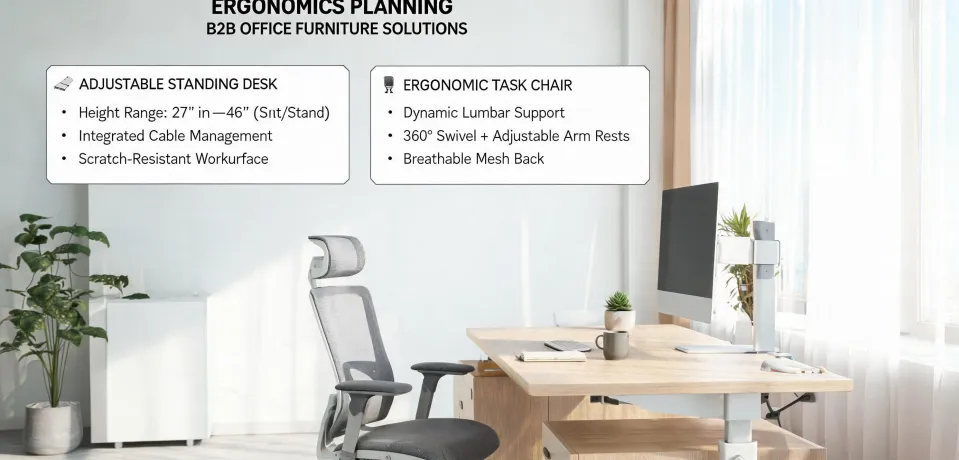
Let's talk specifics. The Uplift V2 in a 60x30 rectangular shape is the workhorse I specify most often. It fits into most offices without taking over the room, and the 60-inch width is enough for a dual-monitor setup plus a laptop. If you need a corner desk, take a close look at the Uplift V3 120-degree standing desk. The 120-degree curved corner is not just a styling choice. It changes the way you use the surface.
With the V3, two monitors can sit in a comfortable curve instead of forming an awkward right angle. You can roll your chair closer to the work surface without the corner edge digging into your forearms. If that sounds like a small detail, you haven't spent a week working on a cramped L-shaped desk. A conventional right-angle corner can waste the entire corner zone; the V3 makes it usable.
I mention this because a 'deal' is not a deal if the desk geometry is wrong. Buying the right shape the first time is a bigger money saver than saving 15% on the wrong one. As of July 2025, the configured price for a 60x30 V2 will be higher than an imported budget frame; that is expected. Verify current rates on Uplift's site because promotions change.
Do the Math on Cost Per Year, Not Cost Per Invoice
Here is a simple way to compare.
Say a budget standing desk costs $550, and in an average busy office, it gets replaced at year three. That's $183 per year. Now say an Uplift desk with the right configuration costs about $1,000 when you add options, and it remains stable after eight years. That's $125 per year. When you compare the two, the annual cost of the Uplift desk is roughly 32% lower, even though its upfront price is roughly 82% higher.
How did I get that? I used a percentage calculation. If you don't want to do it by hand, you can pull up Omni Calculator's percentage decrease calculator and type in the annual cost numbers. The result makes the long-term direction clear: paying more on day one can still leave you ahead before the desk reaches middle age.
My point is not that every expensive desk is smart. My point is that the cheapest search result often wins the moment, but loses the year. I'd rather have a desk that stops being noticed after installation than one that needs guest appearances from a technician every few months.
Why Your Brain Wants to Buy the Cheap Desk
There is another factor that pushes buyers toward the lowest price, and it has nothing to do with budget. People love solvable problems. The same person who spends an afternoon following a guide on how to get HP printer online feels a small burst of victory when the printer connects. A printer setup has a clear answer. A desk purchase has too many variables: size, height range, desktop material, frame color, shipping time, service quality. So many buyers grab the single variable they trust, which is price.
That is backwards. A printer is a replaceable tool; your desk is where your body spends thousands of hours. It deserves at least as much attention as the printer, if not more.
But What If the Budget Desk Actually Lasts?
I hear that question a lot. The honest answer is: some inexpensive desks do last. I don't have data on every office desk on earth, and I would never claim that price alone determines quality. What I do know is that a cheap desk that works is a good outcome, and a cheap desk that fails is an expensive one. The problem is that you don't know which group you're in until the desk is installed and used for a while. By then, the replacement cost includes your staff's time, your installation labor, and the delay of work that doesn't happen. In my spreadsheet, that uncertainty is a real cost.
Bottom Line: Buy the Desk You Won't Have to Buy Twice
There is something satisfying about an office where the furniture does not demand attention. The motors move without drama. The desktop does not shrink or warp. The frame holds its height. When a client walks into a finished space, the best sign is that they stop talking about the desks and start talking about the work.
So is an Uplift desk expensive? Sometimes, yes, especially if you configure it with options that go beyond what you need. But when I choose a sit-stand desk for a client who will live with it for years, 'the one with the lower price' is usually not the least expensive answer. The least expensive answer is the desk that works without becoming an emergency. More often than not, that desk has Uplift on the box.

Discuss this article with a workspace planner